Issue 43 - passivehouseplus.ie

Awaab Ishak’s death shows that building physics are a life and death matter

Advances in building physics in recent years are leading to an ever-increasing understanding among experts of the risks that a litany of pollutants can pose to building occupants. But this has not stopped vulnerable people from living – and dying - in substandard buildings that exacerbate these risks. Urgent action is needed, Toby Cambray explains, to better communicate and decisively tackle the risks buildings can pose to their occupants.
Safety net

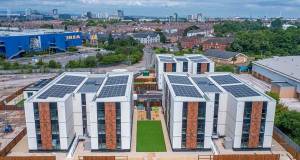
At times the need to put roofs over the heads of vulnerable people and the need to tackle climate change and unsustainable resource use can seem in direct opposition. But one new Welsh scheme shows that doesn’t have to be the case.

Phit the bill

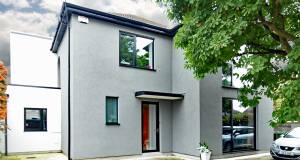
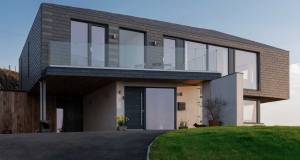
A passive house, by its nature, requires a much smaller amount of energy than a typical home, and when its heating demand is met by electricity, and you cover it in solar PV panels, you can start to see the potential for a whole new generation of passive homes that are semi-independent of the electricity grid. This is the case for Carrstone House in Bedfordshire, which generates so much solar energy it had to be registered as a power station.

Mainstreaming retrofit – a massive missed opportunity

The scale of the retrofit challenge facing the UK and Ireland will require an army of tradespeople to upgrade homes – leading many to the conclusion that a new retrofit industry needs to be built from scratch. But is a more realistic answer staring us in the face – a thriving existing industry of trusted local tradespeople, asks Dr Catrin Maby OBE.

Does nuclear have a role to play in decarbonising energy?

One zero carbon energy source has historically been vehemently opposed by environmentalists. But can nuclear power overcome the high-profile failures of its past, asks Dr. Marc O Riain, or has the technology missed the boat?

Whole life carbon of buildings: a pathway emerges

While significant progress continues to be made on reducing the carbon emissions associated with heating and powering buildings, the other part of whole life carbon calculation, embodied carbon, has proved more elusive. But that may be about to change, and quickly, as Stephen Barrett of the Irish Green Building Council (IGBC) explains.

It's a lovely house to live in now

How do you take a painfully cold, unhealthy house and make it comfortable and affordable to heat? Five years ago, one Irish family decided enough was enough, and took decisive action to transform their period property into a cosy, healthy home where the heating system ticks along without the homeowners touching it.

Northern comfort

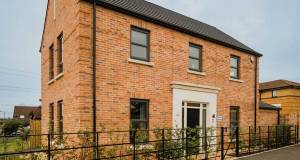
In trickier housing markets, the instincts of house builders have often tended towards building to the worst legal standards required – or worse. One award-winning new project in Belfast’s suburbs is showing that it doesn’t have to be this way – and that developers can thrive by pitching homes designed to ensure comfort and low bills at increasingly energy-conscious consumers.

Quantity and quality - can it be done?

The spectre of high rise and reduced spacing between homes may cast a proverbial and literal shadow over new homes, if an anticipated government policy comes to pass. Mel Reynolds asks: could passive house offer a new route to achieving higher density without reaching for the skies?

Triotherm+ thermal brackets enter UK market

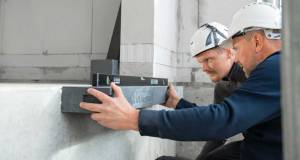
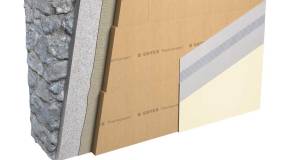
Specialist thermal break manufacturer Meesenburg Group has entered the UK market, introducing the Triotherm+ range of thermal brackets to prevent heat loss and mould risk at window and door reveals, while simplifying the detailing and construction of low energy buildings.

We Build Eco flat pack timber frame partnership gathers pace

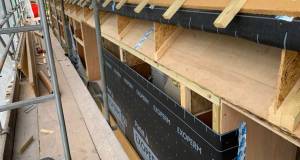
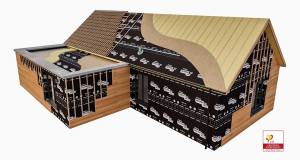
The new collaborative flat pack timber-based build system partnership We Build Eco is reporting strong interest, in the aftermath of a sneak preview feature article on the business in issue 42 of Passive House Plus.

PH15: system thinking key to net zero & ecology

System thinking will be key to radically reducing operation energy use in new housing without suffering unforeseen consequences, a leading sustainable building system supplier has said.

Ecocem announces cement breakthrough to cut CO2 by 70 per cent

Ecocem, Europe’s leader in low carbon cement technologies, has announced a major step in enabling the global cement industry to decarbonise on a trajectory compliant with the Paris Agreement to limit global warming to 1.5 C.

ProAir pioneers with EPDs for ventilation systems

Irish mechanical ventilation manufacturer ProAir has become one of the first companies in the world to gain Environmental Product Declarations (EPDs) for mechanical ventilation systems.

Thermal bypass paper published

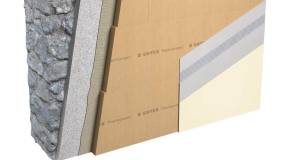
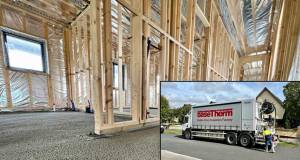
The Passivhaus Trust has published a new technical paper on thermal bypass – the phenomenon where air movement across, within and behind insulation increases heat loss, causes discomfort and enables mould growth.

AECB Conference focuses on practical decarbonisation

The first in-person event of the Association for Environment Conscious Building (AECB) since Covid, the 2022 AECB Conference, focussed on practical solutions to decarbonising buildings.

Ashden Awards winners showcase climate solutions

Organisations tackling the UK cost of living crisis and providing a new generation with the skills for green jobs have been recognised in this year’s international Ashden Awards.

AECB launches two levels of retrofit standards

The Association for Environment Conscious Building (AECB) has introduced a new retrofit standard catering for hard-to-treat homes and cases where homeowners want to take urgent action on climate change but are not currently able to commit to a deep retrofit.

Cold Truths: Part 2

Part one of this article mini-series explained how vulnerable people are likely to respond to the energy crisis this winter. But what will happen to occupant health when people cannot afford to turn the heat on, and how will low energy buildings fare?

Subscribe to this RSS feed