As the world edges ever closer to the precipice of runaway climate change, some sustainability terms have moved from relative obscurity towards the mainstream of marketing and public discourse – and none more so than zero carbon. But is zero carbon construction a real prospect, or is it just wishful thinking?
Words by John Butler and Andy Simmonds
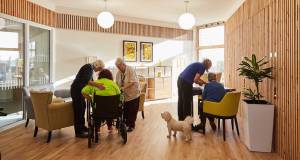
If thermal comfort is important for people of all ages, it’s even more so for elderly people, for whom the right living conditions can be a matter of life or death. Passive House Plus visited one award-winning extra care facility in Exeter to learn how the decision to go passive was working out for the residents.
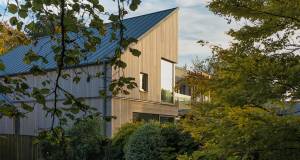
Few architects are tasked with knocking their old family home, but for John Morehead, once this difficult decision was made, it was a chance to create a future-proofed new passive house that embraces its stunning natural surroundings and exhibits remarkable attention to detail.
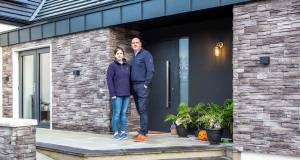
What does it feel like to suffer the cold, mould and discomfort of a 1960s bungalow, and experience its rebirth as a passive house? The owner of one award-winning project spills the beans.
Additional reporting by Jeff Colley
The first passive house certified hotel in Seville’s historic centre defies the challenges posed by its hot climate, small size, and preservation requirements, showcasing innovative strategies to mitigate heat and maximize energy efficiency.
by Juan Manuel Castaño and María Vico, Castaño & Asociados Passivhaus
In the face of an affordability crisis, first time buyers of new homes are being offered a cocktail of incentives to help them get on the property ladder, including the government’s Help to Buy and First Home schemes. Mel Reynolds asks: are these the solution to the affordability crisis?
Patrick Harvie MSP, the Scottish government’s minister for zero carbon buildings, active travel and tenants' rights, was a keynote speaker at the UK Passivhaus Conference in Edinburgh on 17 October, and shared his vision for energy efficient and low carbon buildings in Scotland.
Three leading sustainable building organisations have expressed disappointment with the government’s proposed Future Homes Standard, which went to consultation in December, along with proposals for non-domestic buildings.
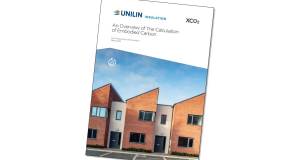
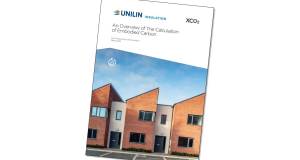
Leading insulation manufacturer Unilin has produced a report on calculating and reducing embodied carbon while using the company’s products.
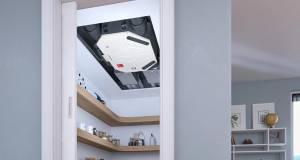
Zehnder Group UK has launched the Zehnder ComfoAir Flex – a mechanical ventilation system with heat recovery (MVHR) specifically designed for tight spaces and challenging installation environments.
Passive house pioneer and offsite modular construction specialist Beattie Passive is delighted to announce the appointment of Simon Clarke to the newly created role of client solutions manager.
Green home certifications and mortgage products must align with new EU rules on green finance, the pan-European Smarter Finance for EU consortium has warned.
Increasing the use of timber in construction is central to the work of a new steering group appointed by the Minister of State for Land Use and Biodiversity at the Department of Agriculture, Food and the Marine, Senator Pippa Hackett.
A quartet of passive house projects picked up awards at the Towards Net Zero Energy Awards 2023.
The Environmental Protection Agency (EPA) has launched a national air quality forecast to provide greater information to the public regarding expected air quality in Ireland for up to three days.
The implications of planning on Ireland’s carbon emissions and the importance of building climate-safe homes were discussed at the Irish Green Building Council’s (IGBC) annual residential conference, Better Homes.
The next version of the EU Directive on the Energy Performance of Buildings (EPBD) has been provisionally agreed – including proposals for zero emission buildings, building renovation passports, a phase out of fossil fuel boilers and the introduction of whole life carbon calculation for buildings.
Carbon emissions originating from the construction and operation of buildings in Ireland constitute a significant portion of the country’s overall emissions, amounting to 37 per cent.
Leading insulation manufacturer Unilin has produced a report on calculating and reducing embodied carbon while using the company’s products.