North Star

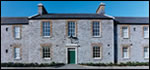
Invest NI has itself invested in a new headquarters in central Belfast that it hopes will be seen as a model for sustainable development, as Richard Linger, Sustainability Director, White Young Green Ireland explains.

Welcome to the archive of Construct Ireland, the award-winning Irish green building magazine which spawned Passive House Plus.
The feature articles in these archives span from 2003 to 2011, including case studies on hundreds of Irish sustainable buildings and dozens of investigative pieces on everything from green design and building methods, to the economic arguments for low energy construction.
While these articles appeared in an Irish publication, the vast majority of the content is relevant to our new audience in the UK and further afield. That said, readers from some regions should take care when reading some of the design advice - lots of south facing glazing in New Zealand may not be the wisest choice, for instance.
Dip in, and enjoy!
Invest NI has itself invested in a new headquarters in central Belfast that it hopes will be seen as a model for sustainable development, as Richard Linger, Sustainability Director, White Young Green Ireland explains.
Architect Paul Leech explains why the new Navan Credit Union is arguably Ireland’s most innovative sustainable building to date, and outlines his hopes that the experience gained from this project can help the construction industry to realise sustainable building in Ireland.

The striking Galway Mayo Institute of Technology(GMIT) Learning Resource Centre was recently recognized with the 2005 President’s Award for Innovation in Design presented by the Association of Consulting Engineers of Ireland (ACEI) to Varming Mulcahy Reilly Associates Consulting Engineers

Planning ahead for Ireland’s electricity supply is by no means a simple matter, given the range of unprecedented issues that are coming to the fore. Massive cuts in emissions must be achieved, whilst decisive action is required to ensure adequate supply of electricity at a time when usage is spiraling. Richard Douthwaite explains the balance that Ireland must achieve between efficient local generation and usage and ensuring optimal interconnection to global renewable electricity supply
A recent study undertaken by Dublin City Council could serve to shatter many commonly held misconceptions about how existing buildings can perform when compared to new build, even simply just in terms of running costs.

At the start of July a key event in the Irish construction industry passed almost entirely unnoticed, with the requirement that the brand new Dwelling Energy Assessment Procedure (DEAP) calculation software be used for all planning applications for new homes with immediate effect. The new tool will be used to calculate Building Energy Ratings (BER) under the requirements of the Energy Performance of Buildings Directive (EPBD). Patrick Daly, lecturer in Environmental Design in the School of Architecture at DIT Bolton St. reveals his view on DEAP and its impact on the industry.

Homeowners thinking of applying for Home Energy Saving scheme grants should pay close attention to a renovation project in Stillorgan, south Dublin. The refurbishment boasts every upgrade measure grant-aided under the scheme, including three types of wall insulation, a high efficiency boiler and sophisticated heating controls. Lenny Antonelli visited the house to find out more.

The unprecedented development seen in Ireland in the Celtic Tiger years was fueled by the availability of cheap, abundant fossil energy. As the boom ends, the state is attempting to boost the economy with investment in larger than ever infrastructural projects which will not benefit many of the tax payers who are funding them, and crucially don’t recognize the extent to which peak oil production will affect their viability, as Richard Douthwaite reveals.

In the third installment of a new feature on international green buildings, Lenny Antonelli takes a look at more innovative, sustainable and striking buildings from around the world.
Ireland has been waiting for a green procurement plan in the public sector for two years. Jason Walsh looks at what the plan should include and why it is needed, now more than ever, and with sustainable building at its core.