From the Construct Ireland archives


Welcome to the archive of Construct Ireland, the award-winning Irish green building magazine which spawned Passive House Plus. The feature articles in these archives span from 2003 to 2011, including case studies on hundreds of Irish sustainable buildings and dozens of investigative pieces on everything from green design and building methods, to the economic arguments for low energy construction. While these articles appeared in an Irish publication, the vast majority of the content is relevant to our new audience in the UK and further afield. That said, readers from some regions should take care when reading some of the design advice - lots of south facing glazing in New Zealand may not be the wisest choice, for instance. Dip in, and enjoy!

Planning for the Future

0302-planningauthoritiestitle.jpg
A marked lack of adequate central government action to promote sustainable house building in Ireland has been recently counteracted by planning authorities such as Fingal County Council taking action into their own hands, and setting standards geared to protect their constituents in an oil and gas scarce future. However, as sustainable building consultant Will Woodrow discovered from surveying planning authorities around the country, local government willingness is not always met with a full grasp of the issues needed to make sustainable housing happen.

Passive attack

CARLOW HOUSES SHOW HOW TO BEAT THE PASSIVE STANDARD
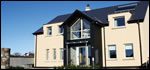
Lenny Antonelli visits a new residential development in rural Carlow that boasts only the second and third certified passive houses in Ireland, and encouragingly, finds that meeting and exceeding the coveted passive standard wasn’t as difficult as expected.

All weather house

A sustainable building must address more than energy, carbon or materials, argues Irish born architect Stephen Roe of up-and-coming London architects Roewu – it must respond to its environment. Not only does Roe’s design for the All Weather House achieve that, it boasts green materials, renewable heating and generous insulation too.

Train drivers building gets sustainability on track

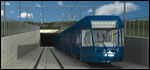
Built on stilts, entirely encased in recycled newspaper insulation on all sides, and designed to be easily taken apart so that its constituent elements can be reused once it reaches its end of life, Portlaoise Locomotive Drivers Building could hardly be more green. But it is – it’s a certified passive house. Iarnród Éireann senior architect David Hughes explains how such a sustainable exemplar came to be.

Rendering

0203rendertitle.jpg
The rendering industry in Ireland is in a process of change and thus has been the centre of much heated debate between renderers, the meat industry, Irish livestock farmers and the Department of Agriculture and Food.

The Twin Crises

0207twincrisestitle.jpg
Feasta Economist Richard Douthwaite on Greenhouse Emissions and the Oil Peak

Clonakilty eco house

Clonakilty Eco house
A new house in west Cork offers a green vision for the future of Irish home building: not only is it A-rated, airtight and highly energy efficient, it’s built with ecological materials that are manufactured in Ireland too.

Steep decline

Brian Cowen
The worl­d has learned the hard way that our political leaders lacked the judgement and resolve to identify and address the problems which led to the recession. Richard Douthwaite argues that a similarly flawed judgement is evident in the assumption that the economy will recover, and advises on how to prepare for a future of global economic contraction.

Well Read - Galway Mayo Institute of Technology

0210GMITtitle.jpg
The striking Galway Mayo Institute of Technology(GMIT) Learning Resource Centre was recently recognized with the 2005 President’s Award for Innovation in Design presented by the Association of Consulting Engineers of Ireland (ACEI) to Varming Mulcahy Reilly Associates Consulting Engineers

Renewed efforts

0310-RenewedEffortsTITLE.jpg
In the future, the high cost and scarcity of fossil energy may force a shift towards retaining and modernising old buildings, thereby avoiding the use of huge amounts of energy to manufacture building materials. John Hearne visited the Belvedere Orphanage, a group of 19th century dwellings whose low energy refurbishment may offer a template for development in the future, by using wood pellet district heating and a host of energy saving measures whilst nonetheless paying great attention to preserving the buildings’ heritage value.