Opinion

Semi-state business Bord Gáis have placed green innovation at the centre of their business strategy. As CEO John Mullins reveals, pay as you save and renewable energy will shape the company’s future.

Semi-state business Bord Gáis have placed green innovation at the centre of their business strategy. As CEO John Mullins reveals, pay as you save and renewable energy will shape the company’s future.

The first scheme of renewable energy grants for Irish homeowners, the Greener Homes Scheme, was launched on Monday 27th March 2006 and will make grant funding available to homeowners looking to install renewable energy heating technology

The announcement in 2007 of the introduction of Smart electricity metering led to widespread hope that Ireland could set a global example by empowering consumers to cut electricity use and generate their own renewable electricity. John Hearne investigates current progress on the initiative, and discovers signs that Ireland’s approach to smart metering could represent a missed opportunity.

The need to reduce CO2 emissions and energy consumption from buildings has never been more immediate. There is a growing consensus that we must reduce our dependence on rapidly depleting, carbon intensive fossil fuels, which, amongst other things, will involve overhauling how buildings are designed, constructed and used.

As we all know, Ireland is currently paying the price for the inability of its political and corporate leaders to take seriously the warning signs of an economy where property investment and borrowing generally got out of control. Looking at policy and commercial investment plans for energy supply and distribution, Richard Douthwaite asks, are the decision makers showing an alarmingly similar attitude to evident gas supply threats?

The introduction of smart metering later this year presents a great opportunity to engage Irish people en masse into substantially reducing their energy consumption, simply by showing them how much electricity they’re consuming, and how much the cost varies at different times of the day. However, as Richard Douthwaite warns, there is a real risk that smart metering may come in a form that benefits the electricity companies and not the end-user.
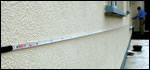
Earlier this year constructireland.ie broke the news of the introduction of the pilot Home Energy Saving Scheme, a new grant funding programme designed to stimulate the en masse refurbishment of Ireland’s poorly performing existing housing stock. John Hearne travelled to one of the pilot areas to see how the scheme is working on the ground, and discover how the scheme is developing.

Government incentives are crucial to sparking a massive energy upgrade of our housing stock, but practical examples are just as important. Keen to push his home's energy performance to the limits, one Dublin homeowner overhauled his entire building fabric and installed renewable heating systems and heat recovery ventilation. Lenny Antonelli visited the house.
Up till now, the activities of semi-state energy companies like Bord na Móna, ESB & Bord Gais have not won the favour of environmentalists. Richard Douthwaite explains how that situation is destined to rapidly change, and exclusively reveals details of the ambitious new green direction being adopted by Bord na Móna.

John Hearne spoke to a number of independent energy experts to develop an impartial view of the main sustainable heating options.