Passive house taking off in the South Pacific, conference hears

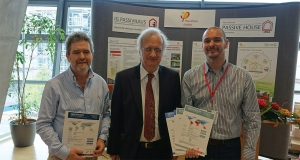
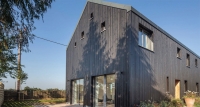
Passive house indeed works everywhere was the core message at the second annual South Pacific Passive House Conference, writes Andrew Michler. The conference was held in Melbourne on 12-13 February. While just a handful of passive houses have been completed in Australia so far, a sizable contingent from New Zealand came to the conference armed with multiple examples of how even warm climate buildings benefit from the energy savings, comfort and critically the health of a passive house. With a major spike in asthma from damp and mouldy homes, the principles such as airtightness, controlled air exchange, and thermal bridge free design are finally being accepted as the best solution in this part of the world. 

Planning granted for new passive house in listed parkland

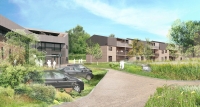
Casa Architects has achieved NPPF 55 statusfor the development of a new passive housein a listed parkland near Frome, Somerset.NPPF 55, recognised as one of the mostdifficult planning applications to achieve, setsstrict planning restrictions to allow only trulyoutstanding or innovative architecture of thevery highest quality and standard to be built in the English countryside.

Cellulose insulation improves airtightness by 30% — PYC Systems

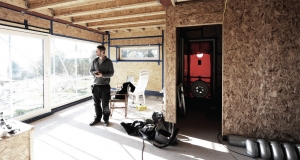
In October 2015, PYC Systems carried out the first of several air tests at the Hilltop project in Richard’s Castle on the Hertfordshire— Shropshire border, Architype’s first small scale residential passive house project. The first blower door test result was 0.59 air changes per hour (ACH), prior to insulating the envelope, which everyone was keen to improve on as it only marginally passed the passive house standard and was prior to fitting services, which are known to increase the risk of air leaks. 

UK Centre for Moisture in Buildings launched at UCL

An initiative aiming to increase knowledge and understanding of the issues moisture can cause in buildings old and new, was launched in London on 26 May. The UK Centre for Moisture in Buildings (UKCMB), backed by University College London and other academic institutions plus the BRE, plans an ambitious programme of research, public engagement, policy work and training to improve moisture safety.